Report
State of Tokenomics, September 2026: AI Tokenomics Insights
The September 2026 State of Tokenomics: 472 responses across 11 industries on AI token cost, ROI proof, model routing, open weights, and pricing.
Open source projects defining Tokenomics
The September 2026 State of Tokenomics: 472 responses across 11 industries on AI token cost, ROI proof, model routing, open weights, and pricing.

How prompt caching works, and how to monitor, measure, and optimize cache hits, a core lever in AI tokenomics.

A structured approach for classifying AI's realized value, from ledger dollars to labor gains, that turns estimates into real figures for stakeholders.

Defines the roles, responsibilities, and operating model guiding how Tokenomics Foundation personas collaborate to govern AI token economics.

Explore AI tokenomics in one interactive map. Trace how tokens are produced, consumed, and turned into business value, from hardware to unit economics.

Introducing The Seven-Layer Tokenomics Stack. What AI costs is decided in the lower layers. How much AI spend is decided in the upper ones. L0 · L1 · L2 · L3 · L4 · L5 · L6
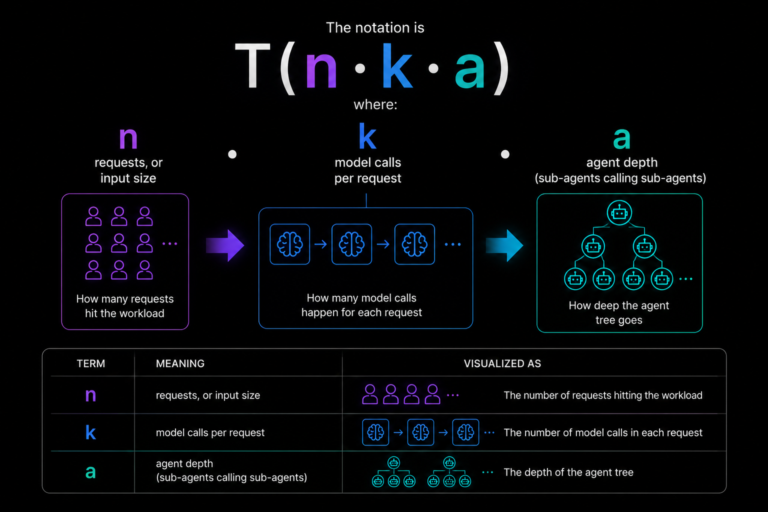
Big-T groups AI workloads by how token use scales with usage, complexity, and autonomy. The paper covers the complexity ladder and five efficiency levers.

Big-O for AI Consumption. A shared language for reasoning about how AI token consumption grows as usage scales, so teams can see the cost curve before the invoice arrives.

The work being done in the FOCUS specification to support AI costs in version 1.5.